Your whole house, working as one system
It connects your power, network, security, cameras and sound, so the house works as one, and keeps working when the internet doesn’t.
The stories we hear most often aren’t about broken equipment. They’re about systems people stopped using. A house so complicated the family went back to the wall switches within two weeks, and the app sits unopened. Or, before a single brick is laid, the opposite worry: that whatever goes in now can’t grow, and in a few years it’s another system to tear out. Both come from the same place: a house built as a pile of devices instead of one system designed to last.
Orchestration
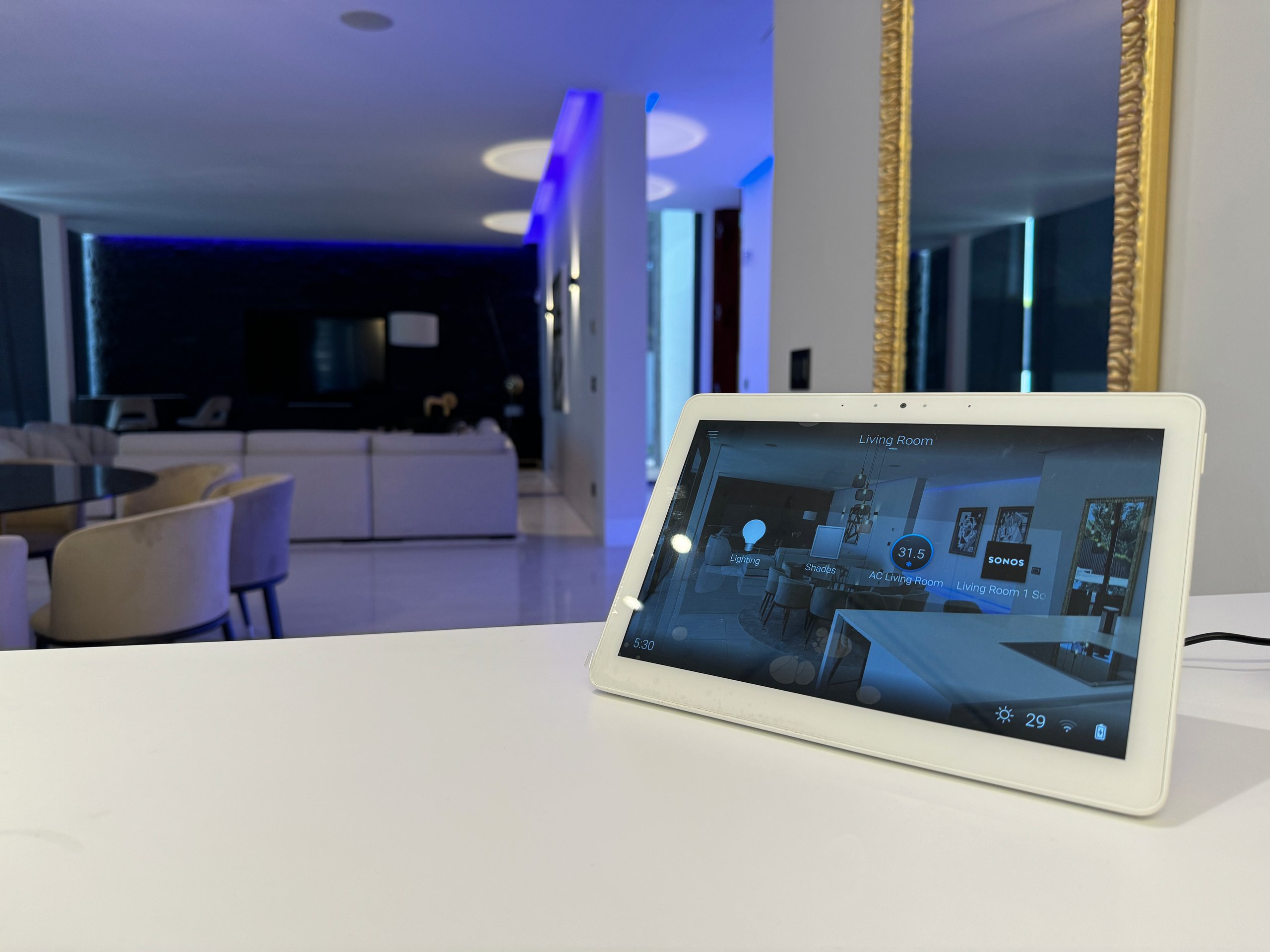
A home runs on layers. Foundation: the electrics and the network everything else stands on. Capability: security, cameras and sound, each doing its own job. Orchestration: the layer that makes them act together. Smart home is that top layer. It’s the dispatcher, the part that decides what the others do and when.
What’s included
- An orchestration platform matched to the house and how you live.
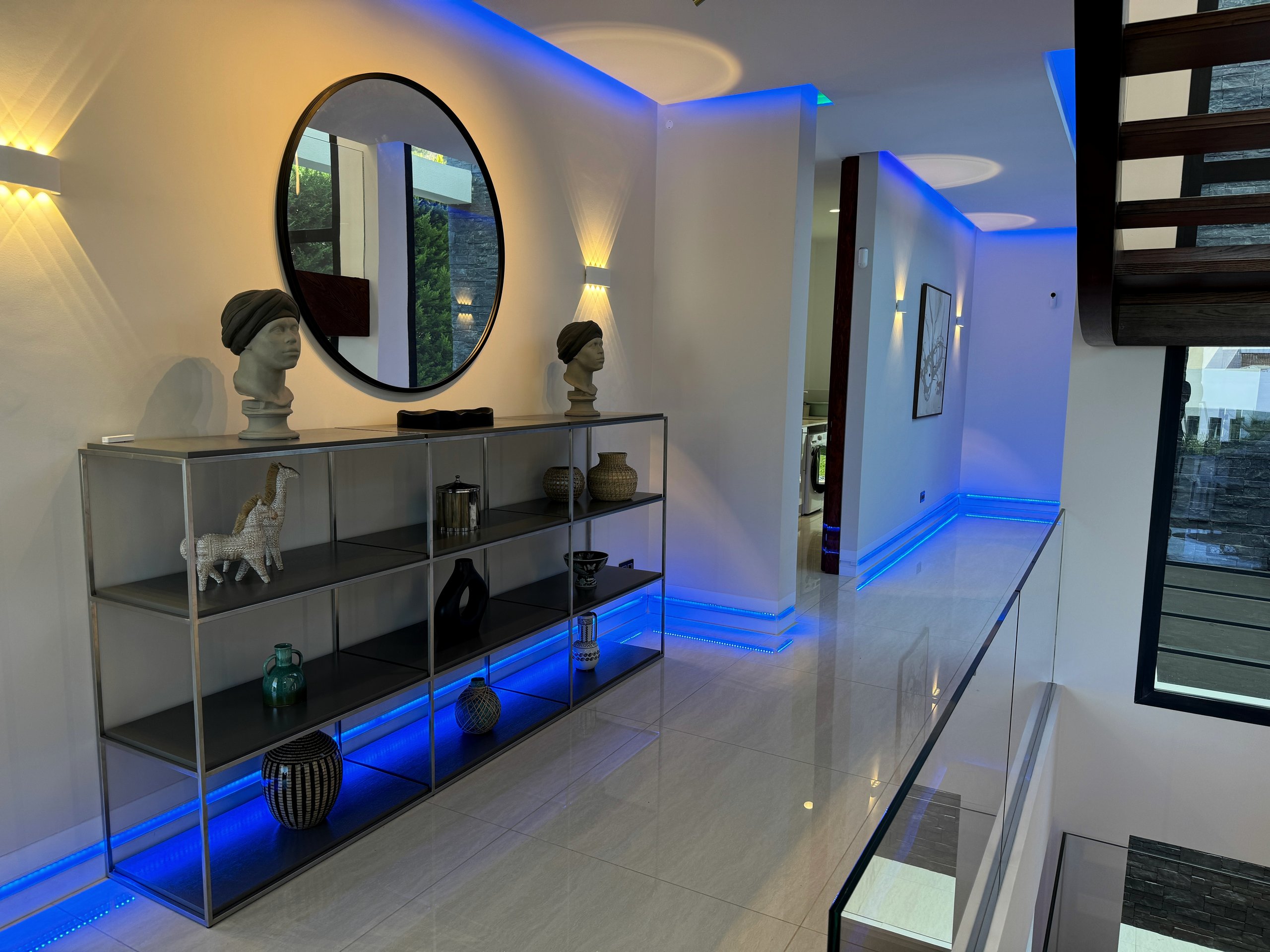
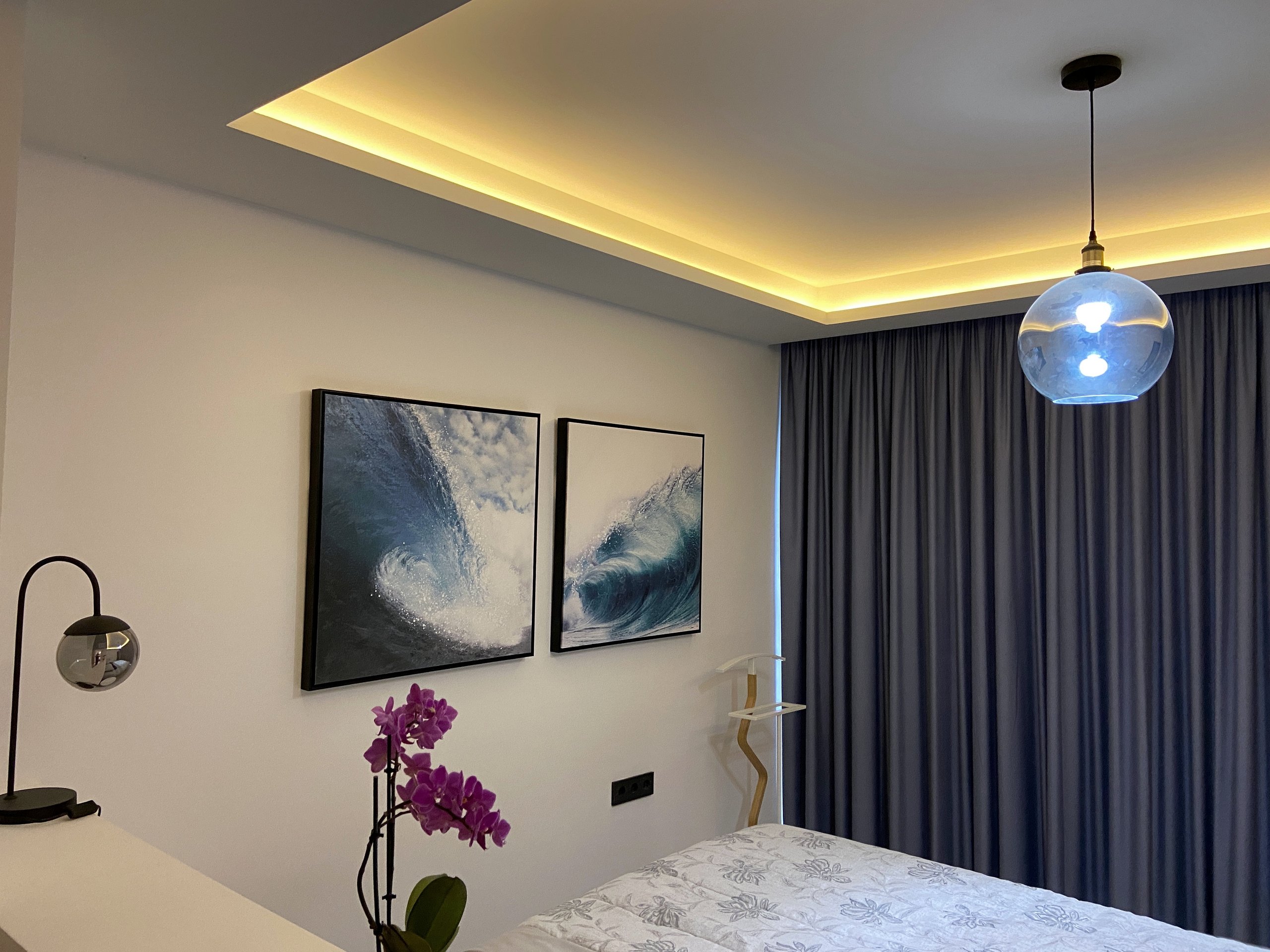
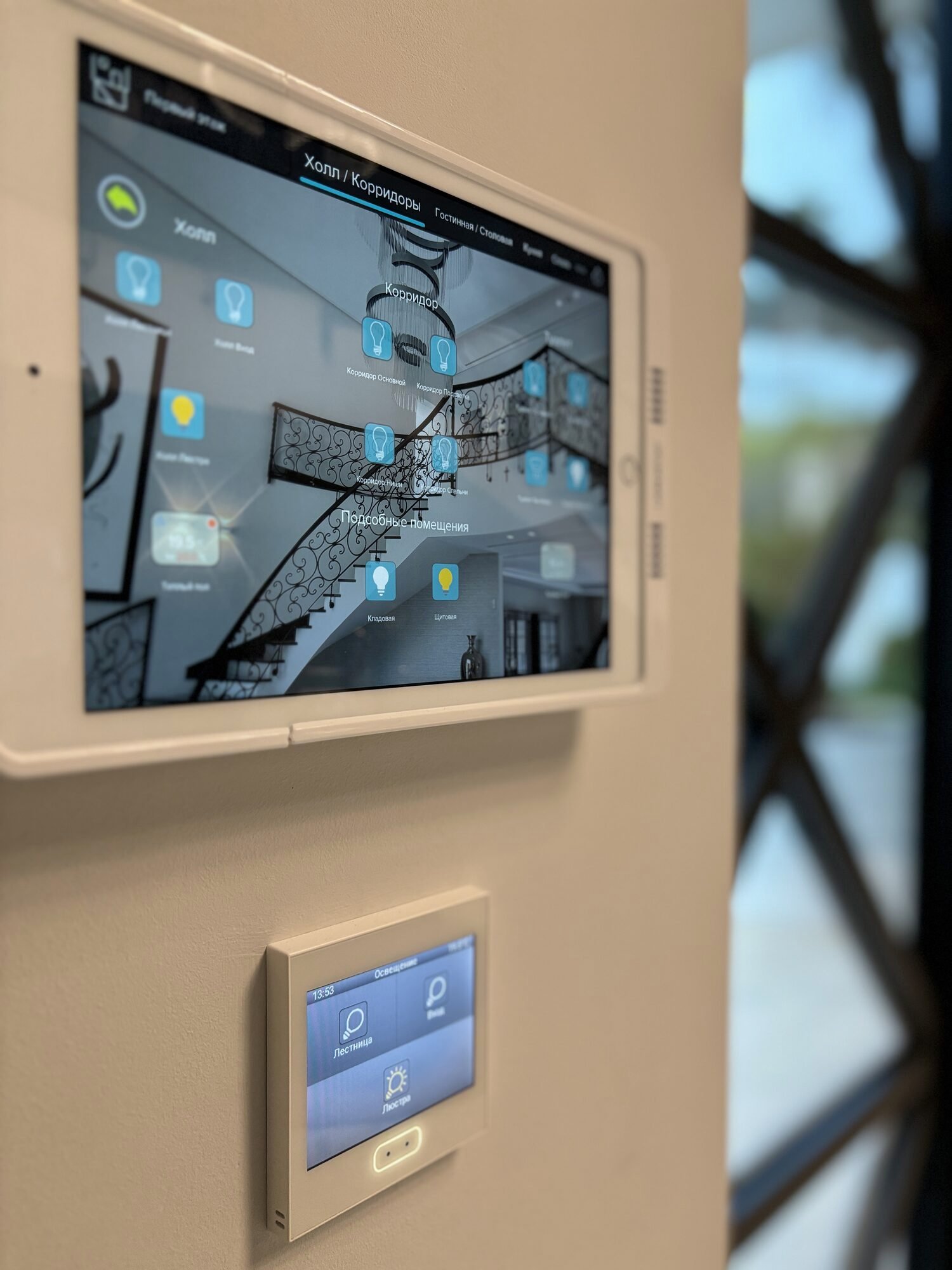
- Lighting scenes that follow the day, from morning to goodnight.
- Climate by zone, on schedules, with humidity kept in range while you’re away.
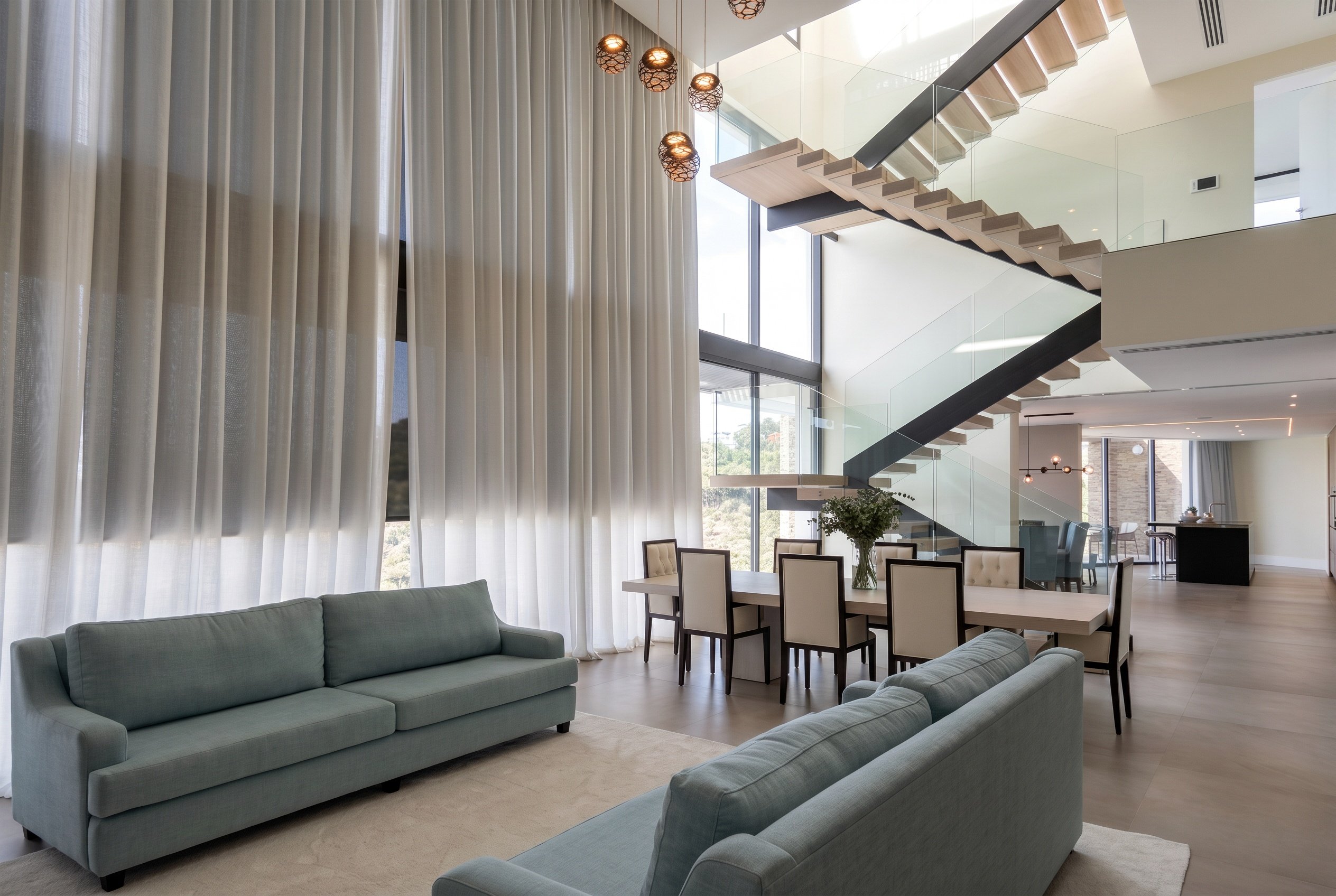
- Blinds and curtains brought into the system, if you want them there.
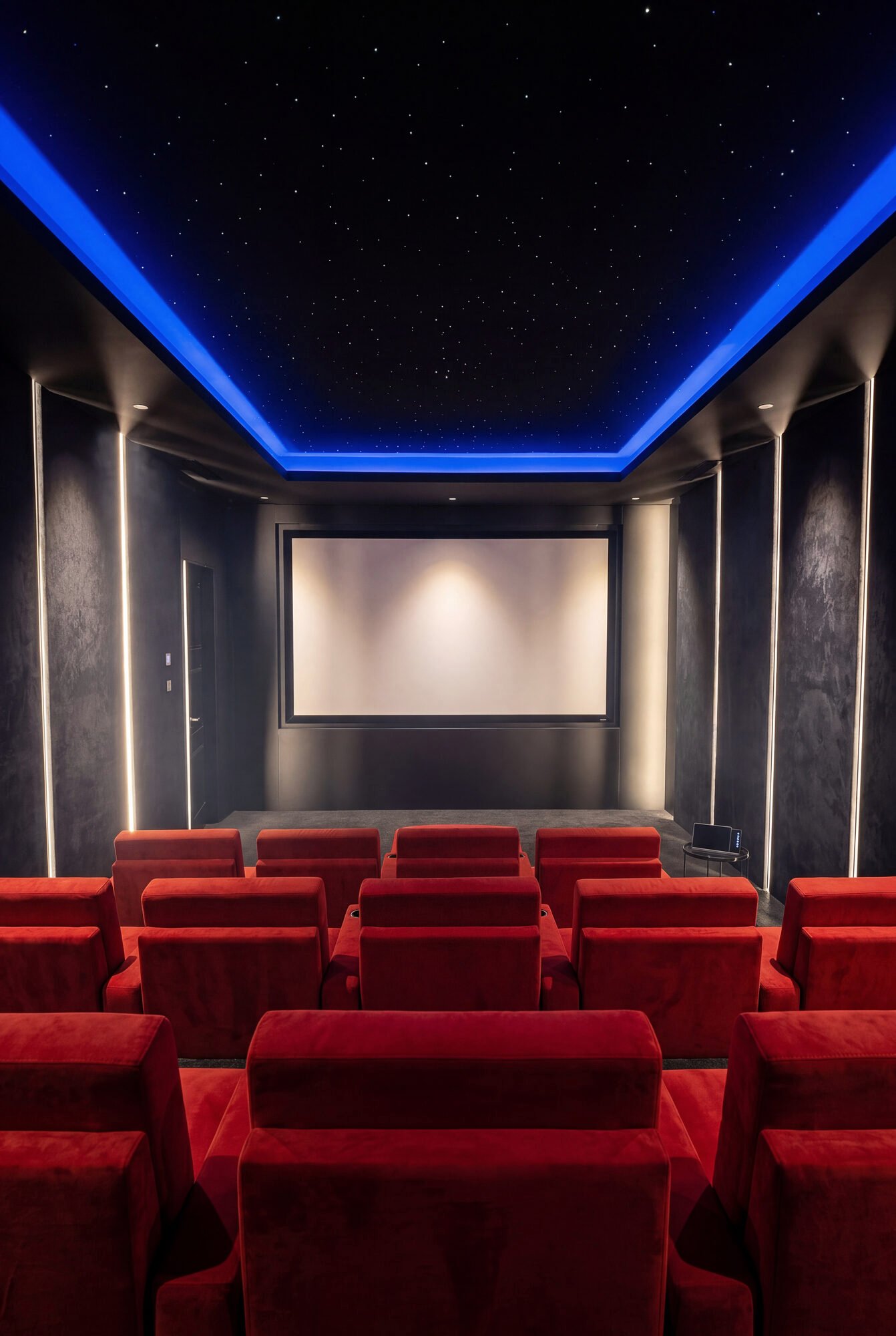
- Scenes for how you actually live: dinner, movie, away, goodnight and holiday.
- Triggers that cross systems: motion at the gate brings up a camera, turns on a light and reaches your phone.
- An open architecture built on standards, so any qualified engineer can work on it.
- Training for everyone who lives in the house before we hand it over.
- Full documentation: schematics, the device list and the scenes themselves.
For example, in Nueva Andalucía we integrated KNX and Control4 with Zennio room controls.
What we won’t build
- A system that stops the moment the internet does.
- A home your family has to learn an app to live in.
- Anything tied to protocols only we can service.
How we work
- Talk about the house – how you live, who’s in it, what it has to do. For a new build, with your architect.
- Design the system – the stack, the scenes and the way it grows with the house.
- Coordinate the trades – power, network, security, cameras and sound, planned together.
- Install and commission – build it, set the scenes and test what happens at the edges.
- Train the household – everyone who lives there, including help and older relatives.
- Hand over and check back – documentation, and a return visit to tune it once you’ve lived with it.
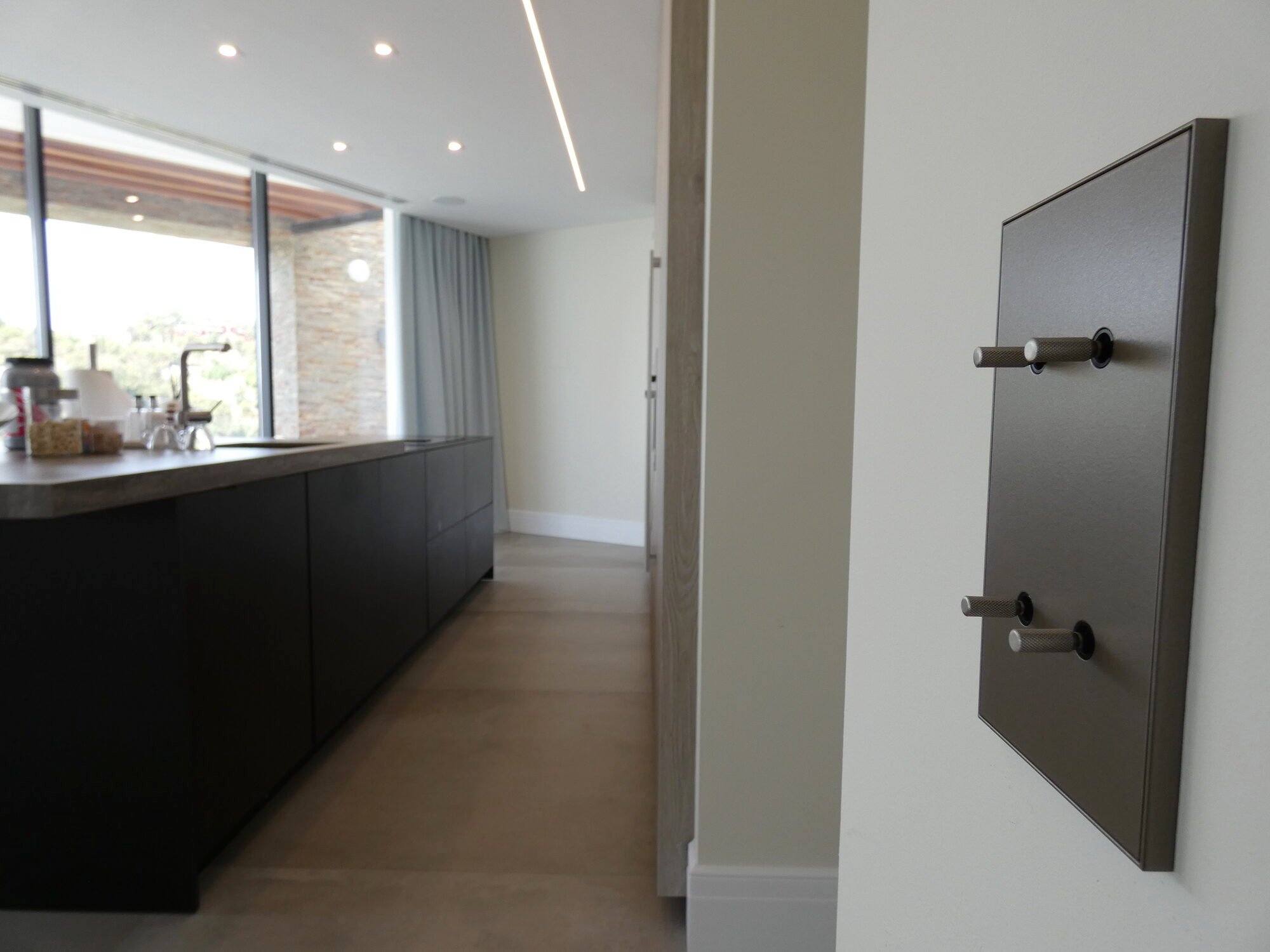
For a new build, it starts at a table with your architect, where you decide what the house should be able to do in ten years while the walls are still on paper. For a house you already live in, it ends somewhere quieter: two weeks after handover, and the family still uses the system, because the switch on the wall still works and nothing asked anyone to learn anything.
Works with the rest
Smart home is the layer the others answer to. The electrics give it something to control. The network carries every command. An alarm becomes a scene: motion, light, recording, a message to you. Cameras become part of the scene, a trigger as much as a record. The light itself is drawn in Lighting design: here those scenes learn to follow the day on their own. And sound and climate move together, on one cue.
One house, one system, one team to answer for it
Whether you’re building or already living in it, we’ll design a system that fits how you live and keeps running for years.